Most shoot days end with far more video footage than the piece they were booked for needs. A one-minute video might use a few dozen shots, and the rest goes onto a drive. Whether it ever works again depends on choices made before anyone picks up a camera, and a little planning turns reuse from a scramble into something that just happens.
One shoot that kept working
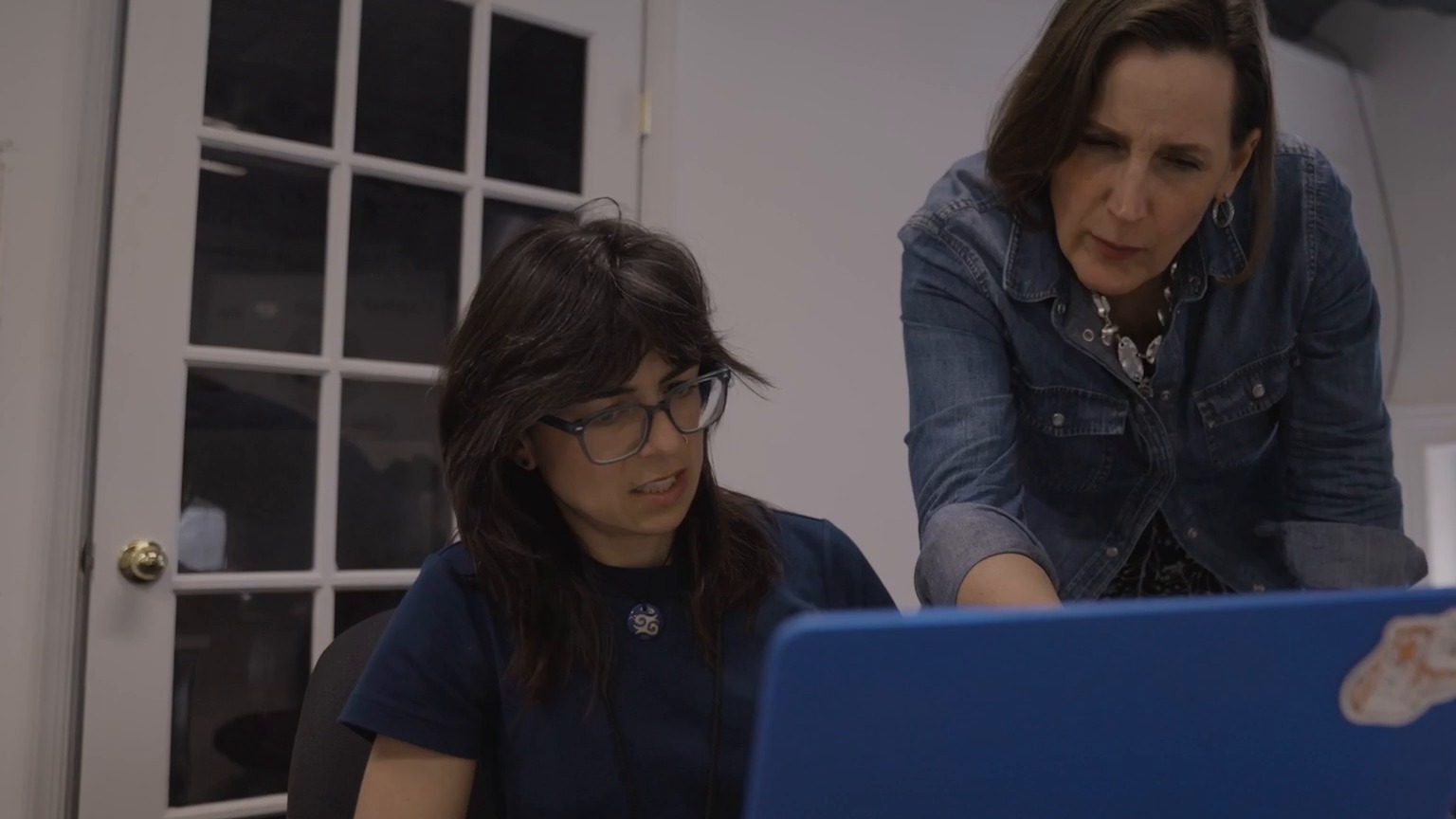
We’ve filmed for the Philip Merrill College of Journalism at the University of Maryland for years, and it’s one of our favorite examples of footage that keeps telling stories. In 2021 we made Terrapin Strong, a brand film that introduces the college. In 2022 came a Title IX story with the Povich Center and a video for the college’s master’s in data journalism. In spring 2024 we made a 60-second About Us with a :30 cut, filming on campus in classes, in the data journalism and news-app labs, with students reporting on sports, at an event in the atrium, and at a Terps baseball game.
We filmed widely that spring, and that wide coverage found uses no one had planned. Clips from that 2024 footage went to the university’s video team for its national Big Ten spots. In summer 2026, other clips became the website headers on Merrill’s homepage, the Povich Center page and the Howard Center page. This fall we’re back on campus for the next overview cycle with a package of several videos, each with its own focus, and the library keeps growing.
The same thinking carries beyond campus. When we were helping to launch DuBar, a family-made jewelry brand, footage from one shoot carried through the whole launch campaign.
Preproduction decides how far video footage travels
Most of what made the Merrill footage reusable happened before we filmed, and preproduction is a part of the work we’re proud of. We ask what the finished video needs to do, who it’s for, and where it will live. Then we ask what else this footage could become, such as a :30 cut, vertical clips for social, or a looping website header. Those answers shape the shot list, the schedule, and which rooms we visit.
A simple way to start is to name the main video, then two other places its footage might live, and plan the day so each one gets what it needs.
You won’t predict every use, and Merrill’s website headers are proof of that. Naming the likely ones still gives the day a wider reach. If you’re starting a project, we wrote about that early conversation in how to brief a video production company.
On set, we shoot for reuse
Once we know where footage might end up, we shoot to keep those options open. We record natural sound cleanly, like the hum of a lab or the crack of a bat, because music-free footage can sit under a silent header, a new soundtrack or someone else’s voiceover. We catch a wide range of real moments, not only the ones the first script calls for, since a clip that shows what a moment means to the people in it is the one worth reusing. And we frame so shots survive a vertical crop, holding each one a few seconds longer than the first edit needs.
Keep the library easy to find
Footage only helps years later if someone can find it, so we keep every shoot organized. Merrill’s three-to-four-year cycle refreshes the library with new faces and spaces while the older footage keeps doing its job. If you’re a school mapping out which moments to catch, our school-year story calendar is a good place to start.